


- June 22, 2026
- Posted by: guyadmin
- Category: Energy & Water Management
Drinking water, viewed for decades as a cheap and self-evident service, has in recent years become one of the fastest-rising expenses in the household budget. A Global Water Intelligence survey that examined water tariffs across 641 cities in some 200 countries found that prices rose by an average of 6.2% between 2024 and 2025, and by as much as 10.7% the year before. In the United States, household water and sewage bills climbed 24.2% over the past five years, more than double the rate of inflation. What such an increase means is that this is no longer just a water bill, but the maintenance bill for an aging urban infrastructure.
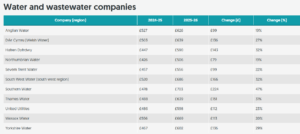
Water has become an expensive, complex infrastructure service that combines desalination, energy, wastewater treatment, coping with the climate crisis, reducing leaks, replacing aging pipes, smart metering, real-time quality monitoring, and more. Europe leads the price increases owing to investments in climate resilience and environmental regulation, and the European Union applies a principle of full recovery of water-service costs, including financial and environmental costs. Britain illustrates this sharply: Water UK, the body representing the country’s water and wastewater companies, has published that the average household water bill for 2025/26 is expected to reach £603, a 26% rise in a single year. That is a one-year increase of £123, about £10 a month! This trend is part of the policy of the UK water regulator (OFWAT), which approved, as part of the PR24 water and wastewater price-review program, that water and sewage bills will rise by an average of about £157 by 2029/30, a 36% increase before inflation. The conclusion from the British case is fairly clear: postponing infrastructure investment does not eliminate the cost, it merely defers it to the public at a higher price later on.
And what about Israel? The price of water in Israel is among the lowest in the Western world. As of January 2026, the low residential tariff stands at NIS 8.51 per cubic meter, and the high tariff at NIS 15.62 per cubic meter. Over the past three and a half years, the base tariff has risen by 65 agorot (about 8%, including inflation). This is a moderate increase by global standards. Israel’s relative tariff stability is not to be taken for granted; it rests on a planned water economy and the early integration of technology. Desalination, wastewater reclamation, smart water meters, and more all rely on scientific development and technological applications for the tight management of the water and sewage economy.
Smart water meters, for example, are not a technological luxury but a practical tool for curbing the future pressure on the water bill and preserving sustainable infrastructure. It is no coincidence that they have become a regulatory requirement. Steps like these are what will allow Israel to maintain its low-tariff advantage in the decade ahead as well.
Sources: Global Water Intelligence – Tariff Survey 2025 · Bluefield Research – U.S. Water & Sewer Bills 2025 · Water UK – Annual Average Bill Changes 2025/26 · OFWAT – PR24 Final Determinations · Israel Water Authority – Tariff Update 1.1.2026
Leave a Reply

free text
text with background-color
free text
text with background-color